The battle for your screen time has entered a radical new phase, and the rules have completely changed.
Remember when “cutting the cord” meant freedom? When streaming promised to liberate us from expensive cable bundles and endless commercials? That was Streaming Wars 1.0, a land grab where Netflix, Disney+, HBO Max, and others fought to become the one platform to rule them all.
Fast forward to 2026, and the streaming landscape looks surprisingly… familiar. We’re bundling services again. Ads are back. And instead of a handful of giants dominating everything, specialized platforms are carving out profitable niches that would have seemed impossible just three years ago.
Welcome to Streaming Wars 2.0, where the question isn’t “Who will win?” it’s “How many subscriptions can consumers actually manage, and what are they willing to pay for?”
Let’s dive deep into the three seismic shifts reshaping how we watch content and what they mean for your entertainment budget.
The Great Re-Bundling: We’ve Come Full Circle (Sort Of)
If you’ve been feeling déjà vu looking at your credit card statement lately, you’re not alone. The streaming industry is experiencing what industry analysts are calling “the great re-bundling”, and it’s happening faster than anyone predicted.
Why Bundling Is Back
The math is brutally simple: subscriber growth has plateaued. Netflix added just 5.9 million subscribers globally in Q3 2024, a fraction of its pandemic-era growth. Disney+ saw subscriber losses in certain quarters. Paramount+ and Peacock are still burning cash trying to reach profitability.
When growth slows, companies have three options: raise prices (which they’ve done repeatedly), cut costs (hello, content purges), or find creative ways to reduce churn. Bundling checks all three boxes.
According to a recent Deloitte Digital Media Trends study, the average U.S. household now subscribes to 4-5 streaming services but regularly uses only 2-3. That unused subscription? It’s a cancellation waiting to happen. But bundle it with something they do use, and suddenly the perceived value increases while the likelihood of canceling decreases.
The New Bundle Landscape
Today’s streaming bundles look nothing like the bloated cable packages we fled from. They’re strategic, targeted, and often surprisingly consumer-friendly:
The Disney Mega-Bundle combines Disney+, Hulu, and ESPN+ for $24.99/month with ads or $29.99 without, offering a 40% discount compared to subscribing separately. With Disney’s content empire spanning family entertainment, general programming, and sports, they’ve essentially recreated a cable package, just delivered over the internet.
The Max-Discovery Bundle merged HBO Max and Discovery+ into simply “Max,” giving subscribers everything from prestige dramas like The Last of Us to reality TV comfort food like 90 Day Fiancé. It’s a masterclass in serving different household members’ tastes within a single subscription.
Apple One bundles Apple TV+, Music, Arcade, iCloud storage, and News+ for $19.95-$37.95/month depending on the tier. While Apple TV+ alone might not retain subscribers, the broader ecosystem creates stickiness that individual services can’t match.
Paramount+ with Showtime eliminated the awkward two-subscription requirement for ViacomCBS content, though at $11.99/month, it’s positioned as a premium offering rather than a budget bundle.
Even more interesting are the carrier bundles. Verizon offers Netflix and Max with certain unlimited plans. T-Mobile includes Apple TV+ and Paramount+. These telco partnerships are becoming the new cable bundle, just delivered through your phone bill instead of a set-top box.
The Bundling Sweet Spot
Dr. Amanda Lotz, professor of media studies at Queensland University of Technology and author of Netflix and Streaming Video, explains the psychology: “Consumers will tolerate $50-70 in monthly streaming costs if they perceive they’re getting comprehensive entertainment coverage. Bundling makes that $50 feel like three things instead of seven. It’s mental accounting.”
The sweet spot appears to be 2-3 paid bundles plus 1-2 free ad-supported services. This gives households access to 6-10 platforms while managing only a handful of subscriptions, exactly where the industry wants us.
But here’s the catch: unlike cable bundles where you couldn’t opt out of ESPN even if you hated sports, streaming bundles still face competition. Don’t like the Max-Discovery combo? Subscribe to Max alone and skip Discovery content. This “unbundlable bundle” creates a fascinating tension that cable never dealt with.
Ad-Supported Tiers: The Compromise Nobody Wanted That Everyone’s Choosing
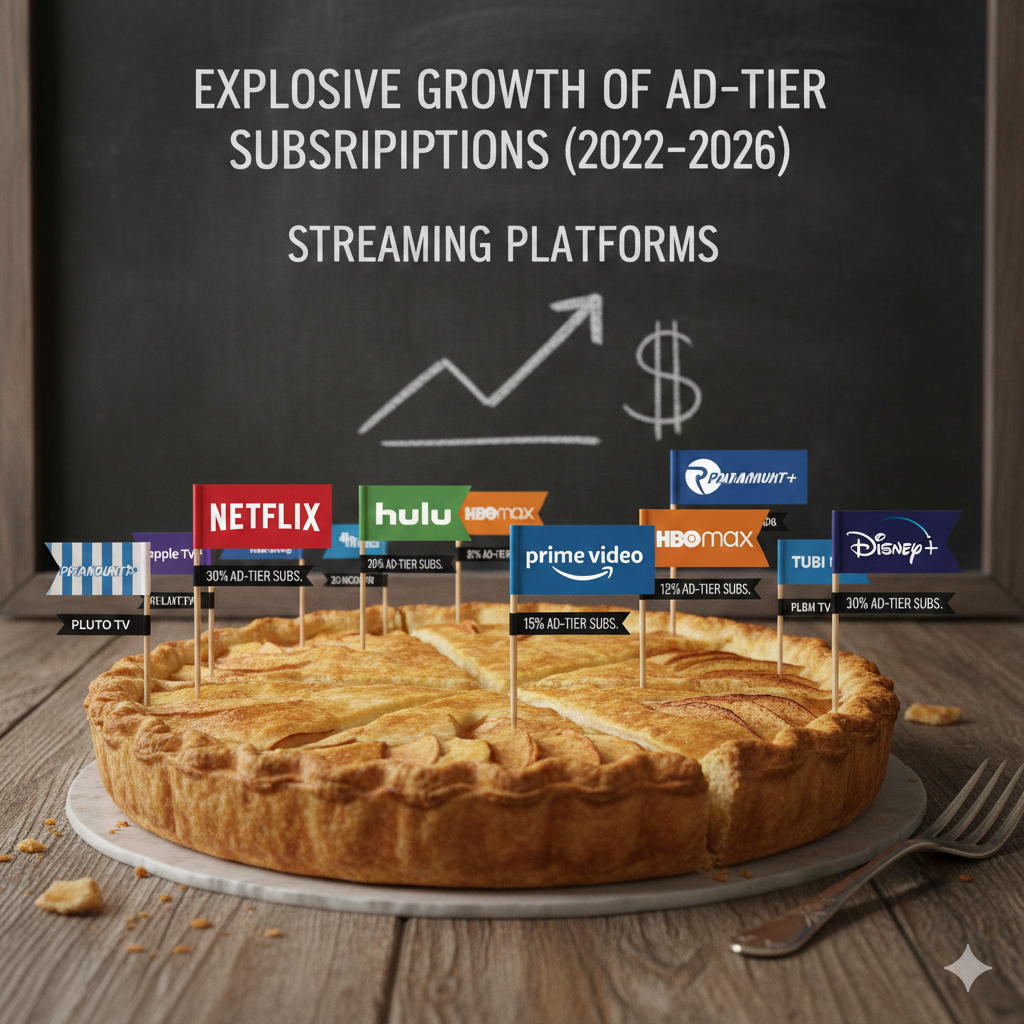
In November 2022, Netflix launched something unthinkable: a cheaper subscription tier with commercials. Industry observers called it desperation. Wall Street called it brilliant. Subscribers called it… acceptable?
Two years later, ad-supported streaming has become the fastest-growing segment of the industry, and it’s fundamentally changing the economics of streaming.
The Numbers Don’t Lie
As of early 2025, nearly 40% of Netflix’s new subscribers choose the ad-supported tier at $6.99/month over the $15.49 standard plan. Disney+ reports that 37% of U.S. subscribers have opted for ads. Peacock and Paramount+ were ad-supported from day one, and their premium tiers struggle to convert free users.
Why the embrace of ads after we specifically paid to escape them?
Price sensitivity is at an all-time high. With inflation, multiple subscription price hikes, and economic uncertainty, saving $8-10/month per service adds up. A household with Netflix, Disney+, Hulu, and Max can save nearly $40 monthly by choosing ad tiers, that’s $480 annually.
But there’s something else happening: ad technology has dramatically improved. According to research from Antenna, streaming ads are typically 2-4 minutes per hour compared to cable’s 18-20 minutes. They’re often better targeted (fewer irrelevant ads means less annoyance). And crucially, they don’t interrupt at random moments, they’re placed at natural breaks that content creators now specifically design for.
“We’re seeing ‘ad-aware’ content creation,” explains Sarah Chen, a streaming analyst at Parks Associates. “Writers and directors now know there will be an ad break at the 22-minute mark of a 45-minute episode, so they create mini-cliffhangers there. It’s making the ads feel less intrusive because the content is structured around them.”
The Revenue Revolution
Here’s the part that makes CFOs salivate: ad-tier subscribers generate more revenue than premium subscribers.
A premium Netflix subscriber at $15.49/month generates… $15.49/month. Revolutionary math, I know. But an ad-tier subscriber at $6.99/month generates that $6.99 plus approximately $8-12 in advertising revenue based on viewing hours and engagement. That’s $15-19/month, more than premium subscribers while being perceived as the “budget option.”
Disney CFO Hugh Johnston revealed in late 2024 that ad-tier subscribers have a lifetime value 20-30% higher than ad-free subscribers once advertising revenue is factored in. This explains why platforms are increasingly making the ad-free tiers almost prohibitively expensive while keeping ad-supported options relatively affordable.
The Psychological Trade-Off
Consumer behavior research reveals interesting patterns in who chooses which tier:
Ad-tier subscribers tend to be younger (18-34), price-conscious, and watch across multiple devices including mobile. They’re often “task-oriented” viewers watching specific shows rather than casually browsing. The ads don’t bother them partly because they’re used to ads on YouTube, social media, and podcasts.
Premium subscribers skew older (35+), have higher household incomes, and often watch on large-screen TVs where ads feel more intrusive. They remember the pre-streaming era and specifically pay for the “no ads” experience.
But there’s convergence happening. Many households now use a hybrid strategy: premium tiers for services they watch daily (Netflix, Disney+), ad tiers for secondary services they dip into occasionally (Max, Paramount+). This optimization mindset treats streaming subscriptions like a portfolio to be actively managed rather than a set-it-and-forget-it utility.
The Future Is Freemium
The next evolution is already visible: FAST channels (Free Ad-Supported Television) and AVOD (Ad-Supported Video On-Demand) services are exploding. Tubi, owned by Fox, now has 78 million monthly active users, more than Max or Paramount+. Pluto TV, Roku Channel, and Amazon’s Freevee are growing rapidly.
These services offer completely free content supported entirely by ads, much like broadcast TV. They’re attracting viewers who either can’t afford subscriptions or have reached their subscription limit. According to Nielsen, FAST channels now account for 12% of total TV viewing time, up from 6% just two years ago.
The end game? A tiered ecosystem where viewers can choose their tolerance level: premium ad-free for $15-20/month, ad-light for $6-8/month, or completely free with significant ads. Just like broadcast TV, cable, and premium cable coexisted for decades, streaming is developing its own hierarchy of access.
The Niche Platform Revolution: Smaller Is Sometimes Better
While Netflix and Disney+ duke it out for mass-market dominance, something unexpected is happening at the edges of the streaming universe: hyper-focused niche platforms are thriving.
These aren’t the struggling also-rans of Streaming Wars 1.0. These are profitable, sustainable businesses that have discovered a counterintuitive truth: you don’t need 200 million subscribers to win. You just need the right million subscribers.
The Niche Advantage
Consider Shudder, AMC Networks’ horror streaming service. With approximately 2 million subscribers paying $6.99/month, it generates roughly $168 million in annual revenue. That’s a rounding error compared to Netflix’s $33 billion, but here’s the difference: Shudder’s content budget is proportionally tiny, its churn rate is remarkably low (horror fans are loyal), and it’s actually profitable, something most streaming services still can’t claim.
Or look at Crunchyroll, Sony’s anime platform. After consolidating Funimation into a single service, Crunchyroll now has over 13 million paid subscribers globally. Anime fans will pay $7.99-$14.99/month for access to simulcast episodes from Japan, ad-free viewing, and manga access. The platform has become the English-speaking world’s primary anime destination, and its subscribers are among the most engaged in all of streaming.
CuriosityStream, founded by Discovery Channel’s John Hendricks, focuses exclusively on documentaries. Mubi curates classic and independent films for cinephiles. Dropout serves comedy fans with original content from CollegeHumor alumni. Nebula offers creator-owned content from educational YouTubers.
What these platforms share:
- Laser-focused content libraries (quality over quantity)
- Highly engaged niche audiences (low churn rates)
- Lower price points ($4-8/month)
- Manageable content budgets (they’re not competing with House of the Dragon‘s $20 million per episode)
- Strong community identity (subscribers feel like insiders)
The Economics of Niche
The traditional media model said you needed massive scale to succeed. License or produce tons of content, amortize those costs across millions of subscribers, use hits to subsidize misses. This is still true for Netflix, Disney+, and other general-interest platforms.
But niche platforms have discovered you can invert that model. Instead of trying to be everything to everyone, be everything to someone. Instead of spending hundreds of millions hoping for the next Stranger Things, spend modestly on content you know your specific audience wants.
“The long tail is real in streaming,” says Matthew Ball, venture capitalist and author of The Metaverse. “The mistake was thinking the long tail meant one platform serving all niches. It actually means many small platforms each serving a dedicated niche profitably.”
Consider the math: Shudder needs roughly 1.5 million subscribers to be profitable. Netflix needs 220+ million. Which is more achievable for a focused content strategy? Which has more room for growth within its niche before saturation?
The Creator Economy Connection
Niche platforms are also benefiting from the creator economy migration. As YouTube, TikTok, and other platforms become more saturated and algorithm-dependent, creators are looking for alternative revenue streams and direct audience relationships.
Nebula, for example, was founded by creators as a creator-owned cooperative. Subscribers pay $5/month to support educational content creators directly while seeing ad-free videos, exclusives, and extended cuts. With over 650,000 subscribers, it’s generating nearly $40 million annually, money that flows directly to creators rather than through Google’s algorithm and ad network.
Dropout took a similar path, betting that comedy fans would pay $5.99/month for CollegeHumor-style content without ads, YouTube restrictions, or algorithm unpredictability. Game Changer, Dimension 20, and other originals have cultivated a dedicated fanbase willing to pay for a Netflix-style experience in the comedy niche.
This model, community-supported niche content, represents a third path between advertising and giant platform subscriptions. It’s Patreon meets Netflix, and it’s working.
The Challenges Ahead
Niche platforms aren’t without vulnerabilities. They’re susceptible to being acquired and rolled into larger bundles (as happened with Crunchyroll/Funimation or might happen with Shudder). They face discovery challenges since they can’t afford Super Bowl ads or massive marketing campaigns. And they must constantly balance maintaining niche identity while growing enough to be sustainable.
There’s also the subscription fatigue question: How many $6/month niche services will consumers tolerate alongside their 2-3 major subscriptions? Early evidence suggests the answer is “1-2 at most, and they rotate based on content releases.”
But the core insight remains powerful: the streaming ecosystem has room for both Walmart and boutique shops. Netflix can chase global mass appeal. Shudder can corner horror. Both can win.
What This Means for Consumers: Navigating the New Streaming Landscape
So what’s a viewer to do in this increasingly complex ecosystem? Here’s your strategic playbook for Streaming Wars 2.0:
1. Audit Your Actual Viewing Habits
Most people overestimate how much they use their subscriptions. Be honest: Which platforms did you use in the past month? Which ones haven’t you opened in three months?
Use the “three-show rule”: If you can’t name three things you’ve watched or want to watch on a service in the past quarter, you probably don’t need it full-time. Consider rotating subscriptions seasonally instead.
2. Embrace Bundles Strategically
Calculate whether bundles save money for services you actually want. The Disney bundle makes sense if you’d subscribe to at least two of the three services anyway. Apple One is a deal if you already pay for iCloud storage or Apple Music.
But resist bundle bloat, paying for things you don’t need just because they’re “included.” That’s how we got into trouble with cable.
3. Right-Size Your Ad Tolerance
Run the math: Are you willing to watch 3-4 minutes of ads per hour to save $8-10/month? Over a year, that’s $96-120 saved for approximately 2-3 hours of ads (assuming you watch 50 hours of content monthly).
For most people, ad-tiers make sense for secondary services but feel annoying on primary services you watch daily. Your mileage varies based on whether ads fundamentally ruin your experience or are just mildly annoying.
4. Add One Niche Platform to Your Rotation
If you have a strong interest, horror, anime, documentaries, comedy, indie films, try subscribing to a dedicated niche platform for a few months. You might find better content density and less decision fatigue than scrolling Netflix for 20 minutes trying to find something to watch.
At $5-7/month, niche platforms are low-risk experiments that often deliver outsized satisfaction to their target audiences.
5. Master the Art of Rotation
You don’t need every service all the time. Consider this quarterly rotation strategy:
- Q1 (Jan-Mar): Netflix + Disney Bundle + Criterion Channel (Oscar season)
- Q2 (Apr-Jun): Max + Paramount+ (spring TV premieres)
- Q3 (Jul-Sep): Netflix + Prime Video (summer movies)
- Q4 (Oct-Dec): Disney Bundle + Shudder + Max (fall TV, horror season, prestige dramas)
This strategy keeps your monthly spending consistent around $40-50 while giving you access to 8-10 services throughout the year. Yes, you might miss some shows during their initial hype cycle, but they’ll still be there when you re-subscribe.
6. Lean Into Free Streaming
Services like Tubi, Pluto TV, Roku Channel, and Freevee have shockingly deep libraries. While you won’t find the latest prestige dramas, you’ll find thousands of movies, classic TV shows, and surprisingly decent originals, all free with ads similar to broadcast TV.
Consider these your “I don’t know what to watch” fallback. They’re perfect for background viewing, comfort rewatches, or discovering older content you missed.
7. Track Your Spending Like a Subscription Portfolio
Use apps like Truebill, SubscriptionsMe, or a simple spreadsheet to track what you’re paying and when annual renewals hit. Set calendar reminders before auto-renewals to decide if you still want each service.
The average American now spends $54/month on streaming according to recent surveys, approaching the cable bills we fled from. Conscious subscription management keeps you in control rather than letting your credit card operate on autopilot.
The Future: Where Do We Go From Here?
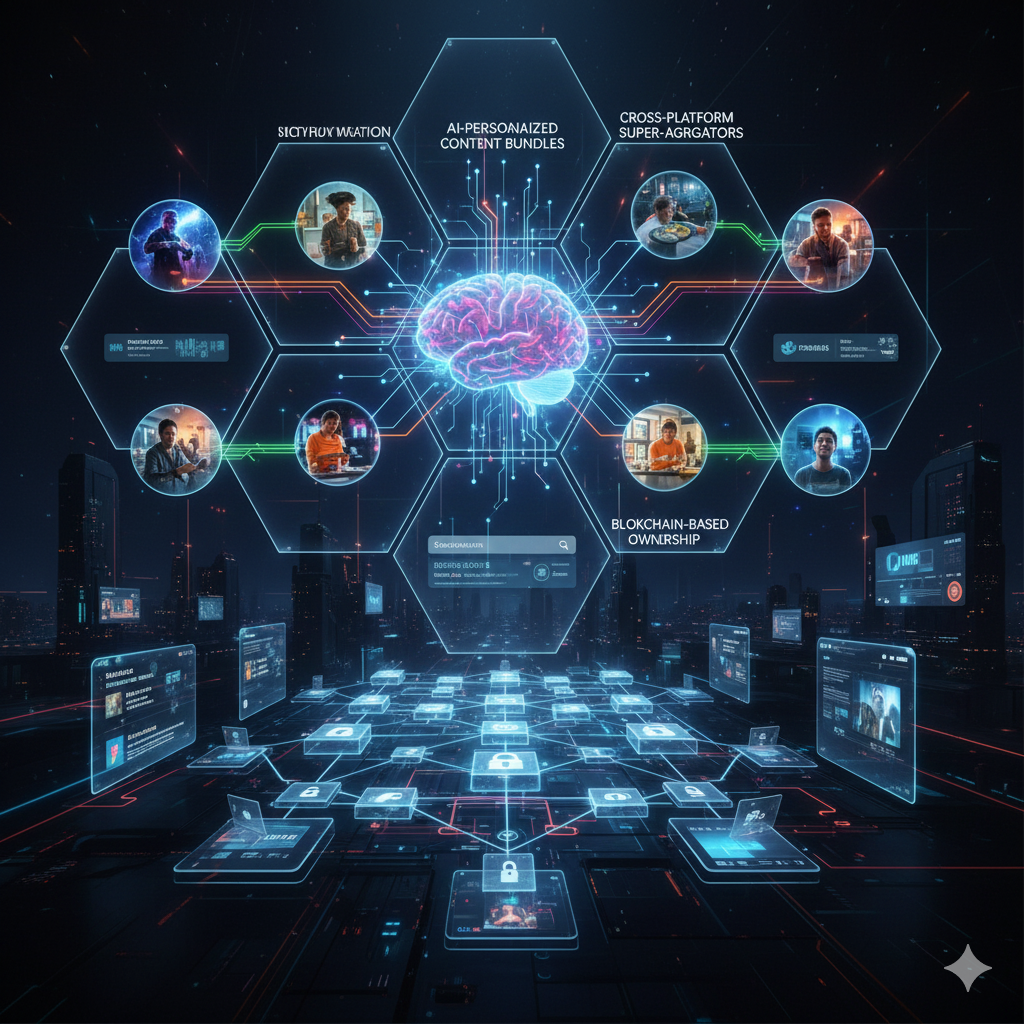
If Streaming Wars 1.0 was land grab and Streaming Wars 2.0 is consolidation and monetization, what’s Streaming Wars 3.0?
Here are the emerging trends that will shape the next phase:
Super-Aggregators Are Coming
Just as Roku and Fire TV aggregate apps, expect to see content aggregators that sit above individual platforms. Imagine subscribing to “ActionHub” for $25/month and getting access to all action content across Netflix, Max, Disney+, and Prime Video without subscribing to each service individually.
Apple TV’s unified interface and search points toward this future, but expect dedicated third-party aggregators to emerge, possibly taking a 20-30% cut in exchange for managing your entire streaming portfolio with a single login and interface.
AI-Powered Personalized Bundling
Why should everyone get the same Disney+ library? Future streaming could offer personalized content tiers: pay $8/month for just the Marvel and Star Wars content you care about, or $12/month for the full library.
Machine learning could analyze your viewing habits and dynamically suggest optimal subscription combinations, automatically rotating services based on upcoming content releases that match your interests. “Your personalized streaming package this quarter: Netflix standard, Disney+ (Star Wars tier), and Max (drama tier) for $32/month.”
Live and Interactive Content Renaissance
As on-demand libraries become ubiquitous, live and interactive content becomes the differentiator. Sports are the obvious driver (hence ESPN’s prominence in bundles), but expect live concerts, interactive competition shows, and shared-viewing experiences to grow.
Netflix’s live-streamed Chris Rock comedy special and WWE deal signal this direction. Content that must be watched now creates urgency and reduces churn in ways catalog content never can.
Creator-Owned Platforms Will Multiply
Following Nebula’s model, expect more creator cooperatives and niche platforms. The appeal of disintermediating YouTube and TikTok is powerful for creators who’ve built audiences but want better economics and creative control.
This could fragment into dozens of micro-platforms (the podcasting model) or consolidate around a few creator-owned multi-channel networks. Either way, we’re seeing the seeds of an alternative streaming economy built on direct creator-audience relationships.
The International Wild Card
U.S. streaming wars get the headlines, but the real growth is international. Platforms from India (JioCinema), Korea (Wavve, Tving), and Latin America (VIX) are competing locally while U.S. platforms struggle with content localization and regional licensing.
The winning global strategy remains unclear: Netflix’s worldwide single-platform approach, Disney’s regional variations (Disney+ Hotstar in India), or true regional platforms that resist consolidation? This question will shape the next decade of streaming.
Blockchain and Digital Ownership?
Could blockchain enable true digital ownership of movies and shows you could watch across any platform? Could NFTs (past the hype) enable a resale market for digital content? Could crypto micropayments enable pay-per-view models that compete with subscriptions?
These remain speculative, but the core problem is real: We don’t own digital content we’ve “purchased,” and switching platforms means losing access to our libraries. Whoever solves portable, platform-agnostic content ownership solves a major consumer pain point.
The Verdict: Are We Better Off Than Cable?
After exploring bundling, ad-tiers, and niche platforms, we’re left with the uncomfortable question: Did we just recreate cable with extra steps?
Yes and no.
Yes, we’ve recreated bundles and ads. Yes, we’re approaching similar monthly costs. Yes, the “everything, everywhere, on-demand” promise of early streaming has fractured into a complex ecosystem requiring active management.
But no, this isn’t cable. We have choice, genuine, granular choice. Don’t like ads? Pay more. Don’t like expensive subscriptions? Accept ads. Want everything? Bundle. Want just horror? Subscribe to Shudder. Want to watch nothing for two months? Cancel everything with no contracts or equipment returns.
The fundamental difference is power. Cable was take-it-or-leave-it monopoly or duopoly pricing with content bundles designed by providers. Streaming is a competitive marketplace where platforms must continuously earn our subscriptions or we’ll cancel and switch. That tension, that threat of cancellation, keeps prices more reasonable and content quality higher than cable ever managed.
According to industry analyst Julia Alexander, “Streaming has given consumers operational control even if we’ve lost some pricing power. We decide when to watch, what to watch, and which services to support each month. That’s a fundamentally different relationship than broadcaster/cable provider relationships ever were.”
Your Move: Optimizing for Streaming Wars 2.0
The streaming landscape will continue evolving. New platforms will launch. Bundles will shift. Prices will fluctuate. Services will merge or shut down.
But armed with an understanding of the industry’s economics, why bundling is back, why ads have returned, and why niche platforms are thriving, you can navigate these changes strategically rather than reactively.
Your streaming strategy should be:
- Intentional: Know what you’re paying for and why
- Flexible: Rotate services based on content, not brand loyalty
- Hybrid: Mix premium, ad-tier, and free services based on usage
- Curious: Try niche platforms that match your specific interests
- Reviewed: Audit quarterly and adjust based on actual viewing
The streaming wars aren’t ending, they’re just entering a new, more complex phase. The winners in Streaming Wars 2.0 won’t be the platforms with the most subscribers. They’ll be the consumers who master the art of the subscription portfolio, getting maximum entertainment value for minimum spending.
So what’s in your streaming bundle? And more importantly, should it be?
What’s your streaming strategy? Have you embraced ad-tiers, stuck with premium, or gone all-in on niche platforms? Share your approach in the comments below, we’d love to hear how you’re navigating the new streaming landscape.
For more insights on media consumption trends and entertainment technology, subscribe to our newsletter and follow us on social media.
Sources and Further Reading:
- Deloitte Digital Media Trends Study
- Nielsen Streaming Platform Reports
- Antenna Streaming Analytics
- Parks Associates Media Research
- The Verge Streaming Coverage
- Amanda Lotz – Netflix and Streaming Video: The Business of Subscriber-Funded Video on Demand
- Matthew Ball – The Metaverse: And How it Will Revolutionize Everything
